
Shaping responsible chemistry: The strategic role of women in Europe
EuChemS is pleased to host its next Global Women’s Breakfast on 10 February 2026, from 10:00 to 11:30 CET (Brussels time).
This online event will explore the theme “Shaping responsible chemistry: The strategic role of women in Europe,” highlighting how women across the continent contribute to advancing responsible, ethical, and socially conscious chemistry.
Women in chemistry have long played a vital role in strengthening communication, fostering collaboration, and integrating knowledge across scientific fields. Their leadership in forming cross-disciplinary links, cultivating supportive networks, and connecting scientific work with broader societal needs captures the essence of the Global Women’s Breakfast: empowering the chemistry community through meaningful connections.
Building on the spirit of IUPAC GWB 2026 – Many Voices, One Science, the webinar reflects the Guiding Principles of Responsible Chemistry, with a particular focus on two areas central to EuChemS: Communication & Collaboration and Convergence Across Disciplines. These themes also underline the significant European contribution to global responsible chemistry.
Join us for an inspiring and insightful discussion celebrating the impact of women scientists in shaping the future of responsible chemistry.
Host
Angela Agostiano

Angela Agostiano is the President of the European Chemical Society (EuChemS) and the Chair of the EuChemS Task Group on Inclusion and Diversity.
Her area of expertise is Chemical-Physical Processes. She is currently involved with preparation and characterization of nanosized semiconductors for photochemical, environmental and sensing applications amongst other topics. She is Professor Emeritus at the University of Bari Aldo Moro, Italy, and was the President of the Italian Chemical Society (SCI) from 2017 until 2019.
Moderator
Wolfram Koch

Until his retirement in August 2024, Wolfram Koch served as Executive Director of the German Chemical Society (GDCh). Previously, he was Professor of Theoretical Organic Chemistry at TU Berlin and a Senior Scientist at IBM in Germany and the US. His research focused on quantum chemical studies of open-shell transition metal compounds and molecular spectroscopy, resulting in around 190 peer-reviewed publications and a textbook on density functional theory.
Over more than 20 years at GDCh, he contributed to numerous advisory bodies, including the EU Open Science Policy Platform and IUPAC’s CPCDS. He currently serves as IUPAC Treasurer. Wolfram is a Fellow of the Royal Society of Chemistry, an Honorary Fellow of Chemistry Europe, and an honorary member of several national chemical societies.
Speakers
Cristina Femoni

Cristina Femoni is Full Professor of General and Inorganic Chemistry at the University of Bologna, specialising in high-nuclearity transition-metal clusters and atomically precise nanoparticles. She holds a PhD in Chemical Sciences and has authored over 160 peer-reviewed publications, while supervising around 50 students.
She has participated in major national and European research projects and collaborates with leading institutions across Europe. Cristina Femoni currently serves as President of the European Chemistry Thematic Network and holds several academic leadership roles at the University of Bologna.
Nineta Hrastelj

Nineta Hrastelj serves as the Secretary General of the European Chemical Society (EuChemS). She earned her PhD from the University of Ljubljana, Slovenia, in close collaboration with industry partners and the University Rovira i Virgili in Tarragona, Spain.
With expertise spanning analytical chemistry, chemometrics, and metrology—the science of measurement—her research bridges disciplines and connects scientific rigor with real-world applications. She later brought this knowledge into the policy arena, contributing to national and European initiatives in science policy, accreditation, and standardisation. She is the author, co-author, and editor of numerous scientific publications as well as articles at the interface of science and policy. Her contributions to both science and society have been recognised through multiple national and European awards.
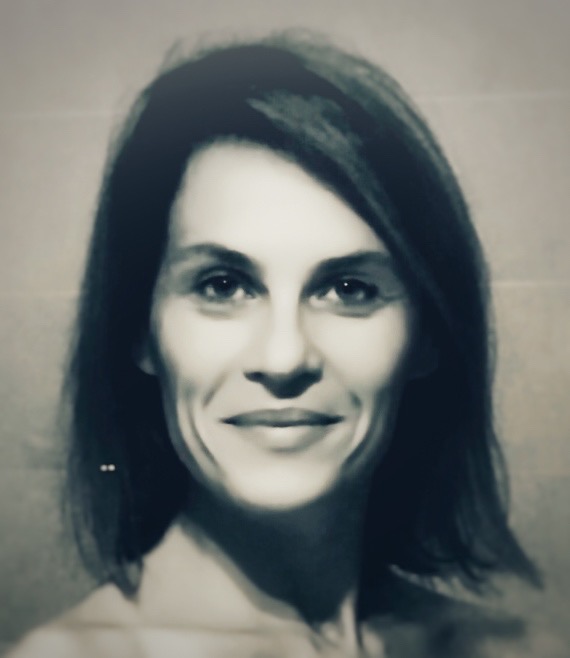
Silvija Markic

Silvija Markic is a Professor of Chemistry Education at the Faculty of Chemistry and Pharmacy at LMU. Her research focuses on diversity and inclusion in chemistry education, as well as on developing innovative teaching methods for heterogeneous learning environments.
She leads international projects that promote diversity in teacher education and has published numerous works in the fields of chemistry and STEM education. She is committed to inclusive, practice-oriented approaches that connect theory with classroom practice.
Javier García Martínez

Javier is Professor of Inorganic Chemistry and Director of the Molecular Nanotechnology Laboratory at the University of Alicante, Spain, where he develops nanomaterials for cleaner energy and sustainable chemistry.
He pioneered catalysts with controlled intracrystalline mesopositivity, now widely used to cut CO2 emissions in industry. An entrepreneur, he founded Rive Technology at MIT to commercialize CO2-reducing catalysts, later sold to Grace. His work has earned top awards, including the Kathryn C. Hach Award, and honors such as Fellowships at the Royal Society of Chemistry and the Chinese Chemical Society; he served as IUPAC President (2022–2023) and received Spain’s National Research Award in 2023.
Anne Pawsey

Anne Pawsey earned her PhD in Soft Matter Physics at the University of Edinburgh. In her subsequent postdoctoral positions her research bridged fundamental science with industrial applications as a part of the Edinburgh Complex Fluids Partnership.
She went on to coordinate graduate training for the Scottish Universities Physics Alliance and later worked at the University of Göttingen as teaching and e-learning coordinator for the Max Planck School Matter to Life, a program explicitly designed to connect physics, biology, and chemistry. In 2022, she became Secretary General of the European Physical Society, where she continues to foster international cooperation across diverse scientific communities.
Andrea Usenik

Andrea Usenik is a research and teaching assistant at the Division of Physical Chemistry, University of Zagreb. A former national chemistry champion and International Chemistry Olympiad bronze medallist, she completed her BSc, MSc, and PhD in chemistry between 2017 and 2023. She teaches physical chemistry and thermodynamics, supervises student research, and has co-authored ten papers and over 40 conference contributions.
Andrea also serves as deputy head of the Laboratory for Spectroscopy and coordinates Social Media and PR for the Department of Chemistry. She is active in conference organisation and the Croatian Chemical Society, and since 2024 has represented Croatia in the EYCN alongside her role as CAS Young Scientist.
The webinar will be recorded, and the after-video will be shared on our social media channels following the event.