


Submit your nomination HERE.
Deadline: 31 December 2021
EuChemS Female Organic Chemist of the Year 2021
Submit your nomination HERE.
Deadline: 31 December 2021
Members of the International Award Committee for European Chemistry Gold Medal (IACM)
Submit your nomination HERE.
Deadline: 31 December 2021
2021 EuChemS Historical Landmarks
Submit your nomination HERE.
Deadline: 31 December 2021
2021 EuChemS Award for Service
Submit your nomination HERE.
Deadline: 31 December 2021
2021 EuChemS Lecture Award
Submit your nomination HERE.
Deadline: 31 December 2021
European Food Safety Authority (EFSA) public consultations
A number of consultations put forward by the European Food Safety Authority (EFSA) are currently open.
- Assessment Report on the active substance Fenpropidin
Deadline: 5 November 2021
- Assessment Report on the active substance Glyphosate
Deadline: 22 November 2021
You can take a look at it all here.
EuChemS is an official accredited stakeholder of the European Food Safety Authority (EFSA).
European Chemicals Agency (ECHA) public consultations
A number of consultations put forward by the European Chemicals Agency (ECHA) are currently open.
- Call for comment on harmonised classification and labelling (CLP)
Deadline: 5 November 2021 - Consultation on OEL proposal
Deadline: 26 November 2021
You can take a look at them here.
EuChemS is an official accredited stakeholder of the European Chemicals Agency (ECHA).
European Commission Public Consultations and Roadmaps
A number of consultations and roadmaps put forward by the European Commission are currently open:
- Sustainable EU food system –new initiative (roadmap)
Deadline: 26 October 2021 - Policy framework on biobased, biodegradable, and compostable plastics (roadmap)
Deadline 27 October 2021 - Revision of EU legislation on hazard classification, labelling and packaging of chemicals (public consultation)
Deadline: 15 November 2021 - Revision of the EU general pharmaceuticals legislation (public consultation)
Deadline: 21 December 2021 - Digitalising the energy sector – EU action plan (public consultation)
Deadline: 24 January 2022

EIC and EIT team up for EU Health start-ups
On 23 august 2021, the European Institute of Innovation and Technology (EIT) Health Bridgehead programme expanded to the European Innovation Council (EIC) start-ups, achieving its first link since the beginning of the EIT Health-EIC Collaboration Pilot. This cooperation aims to enhance innovation, competitiveness, and stability of start-ups.
Now in its fourth year, the Bridgehead programme plans to support start-ups that have delivered effective solutions in one or more domestic markets to expand into new international markets. The Bridgehead programme is divided into three types of programmes: Europe (for scale-up inside Europe), Global (to develop an international expansion), and Inbound (for supporting the non-European ventures to gain access to the European market).
“We are happy that the EIT and EIC pilot collaboration is now stretching its wings via three new Horizon 2020 funded projects, among which is the ‘EIT-EIC CollabPilot’ coordinated by EIT Health. The collaboration will provide the opportunity to test synergies between organisations and programmes, exchange ideas, support the best innovators and entrepreneurs and reach out to local innovation communities. We look forward to collaborating with EIT Health”
– Jean-David Malo
Director of the European Innovation Council
Source: https://bit.ly/3BPj5Ly
The ‘EIT-EIC Collab Pilot’ is a €1 million project funded under Horizon 2020 and coordinated by EIT Health. It covers 28 European health start-ups granted with special benefits from EIC. This includes the bridgehead, the Gold Track, the Finance Booster and the Bootcamps.
For more details about the Bridgehead programme, click here.
MSCA Conference on unbalanced mobility flows
The Slovenian Presidency of the Council of the EU is organising the MSCA Conference on 15 and 16 November. This 2-days conference aims to address EU researchers’ unbalanced mobility flows, the reintegration of researchers, and to make a recommendation for the implementation of the new European Research Area (ERA). This online event will provide participants with a platform for discussion and showcase examples to promote the return of migration and reintegration of MSCA researchers, bringing their research careers, knowledge, and skills back to their country of origin at the end of their fellowship.
MSCA former, current fellows, and stakeholders are invited to take part in the conference by sending their submissions to the call “MSCA Story”: they have until 5 November to share their story of migration flow to their host country and the relationship they have with their home country.
More information about the MSCA Conference is available here.
2021 Nobel Laureates in Chemistry
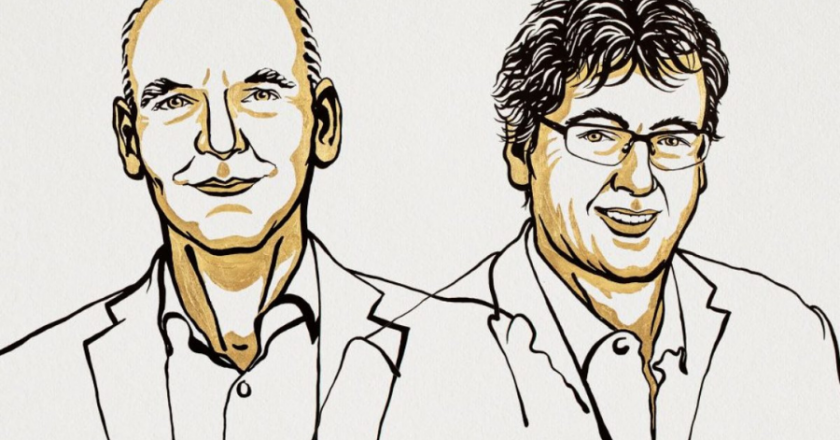
On 6 October 2021, the Royal Swedish Academy of Science announced that Benjamin List (German) and David W.C. MacMillan (British) are the 2021 Nobel Laureates in Chemistry for the development of asymmetric organocatalysis. These new tools for building molecules can be used to make medicines, plastics, perfumes, and flavours in a more environmentally friendly way.
In 2000, Benjamin List and David W.C. MacMillan, independently from each other, discovered a new way to produce asymmetric molecules – when two versions of chemicals can form, which are each other’s mirror image – through small organic molecules. It is used to drive multitudes of chemical reactions. Before their findings, only metals (often including toxic and rare metals) and enzymes were known as the two types of catalysts available. Asymmetric catalysis is precise, fast, green, and cost-effective. It is being used widely today, especially to produce pharmaceuticals.
Despite the impressive development of organocatalysis since 2000, Benjamin List and David MacMillan have remained leaders in the field. Benjamin List is currently Director at the Max-Planck-Institut für Kohlenforschung (Germany) and David W.C. MacMillan is currently Professor of Chemistry at Princeton University (US).
More information is available on the official Nobel Prize website.
OPCW builds a ChemTech Centre in The Hague
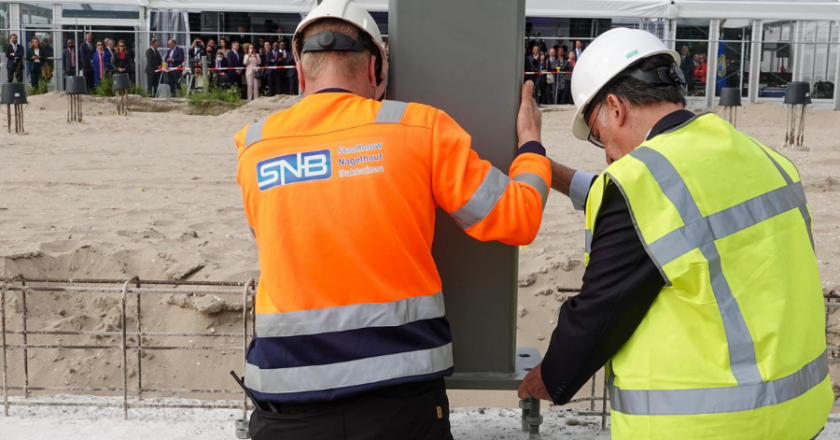
On 23 September, the Organisation for the Prohibition of Chemical Weapons (OPCW) organised the ‘First Pillar Ceremony’ led by H.E. Mr Fernando Arias, OPWC Director-General, during which the first pillar of the new Chemistry and Technology (“ChemTech Centre”) was secured in place in The Hague (The Netherlands). This building, scheduled to be fully operational by the end of 2022, will host laboratories as well as training and equipment facilities to support the work of the organisation in implementing a global ban on chemical weapons.
Floris Rutjes was invited to attend this ceremony in his capacity as President of the European Chemical Society (EuChemS). This event symbolically marked the start of the construction of the ChemTech Centre.
Read more about it here.
European Strategy for Critical Raw Materials
On 27 September, the members of the Committee on Industry, Research and Energy (ITRE) voted on a European strategy for critical raw materials. The report prepared by MEP Hildegard Bentele discusses imposing stronger controls on critical raw material waste stream and to prevent their illegal export.
You can find the procedure file here.
During the same plenary meeting, ITRE committee members also voted on its report and the decision to enter interinstitutional negotiations on the proposed revision of the 2013 regulation on trans-European networks in energy (TEN-E) – a EU policy that focuses on linking energy infrastructure of members states.
EU research ministers adopted Council conclusions on the global approach to research and innovation
On 28 September, EU research ministers met in Brussels (Belgium) during the Council of Ministers Responsible for Competitiveness (Research) to discuss the European Union’s global approach to research and innovation and the new European Research Area (ERA).
The conclusions adopted will advance the implementation of measures for a globally strong and resilient European Union. Key actions were identified, including building a modern, efficient, and simplified structure for the new European Research Area (ERA) to boost multilateral cooperation. In addition, ministers called the Commission and member states for more cooperation with third countries in research and innovation and through the programme Horizon Europe. The importance of enhancing cross-sectoral cooperation was also emphasised.
During this Council meeting, the Slovenian Presidency presented the Ljubljana declaration on gender equality in research and innovation. This declaration aims to ensure equal and balanced consideration of male and female researchers under ERA. It is expected to be published by the end of November this year.
Furthermore, the Slovenian Presidency updated ministers on the state of 10 Institutionalised European partnerships under Horizon Europe. With a €10 billion euro package, these nine industrial partnerships and public partnership on metrology aim to contribute to the realisation of the green and digital transition and to solving other important societal challenges. The first initiatives are expected to be launched as of December this year and the first calls for projects to open in early 2022.
You can read our full debrief on the Slovenian Presidency priorities for Science, Research and Innovation in the July issue of our Brussels News Updates newsletter here.
For more information about the Competitiveness Council (Research), please visit the website of the Slovenian Presidency.
Welcome to the 1st Global Sustainable Chemistry Week
The International Sustainable Chemistry Collaborative Centre (ISC3), a EuChemS Supporting Member, is organising the first “Global Sustainable Chemistry Week”, from 8 to 12 November. For five days, ISC3 will host various online events, including panel discussions and lectures during which ISC3 partners and stakeholders will present their research activities and projects related to sustainable chemistry.
Nineta Hrastelj, EuChemS Secretary General, will join a panel discussion on the EU Chemicals Strategy on Sustainability on Friday 12 November 2021. She is invited to share her expertise in outlining the challenges, opportunities and potential pitfalls connected to this strategy.
Find out more about the Global Sustainable Chemistry Week in the ISC3 website.
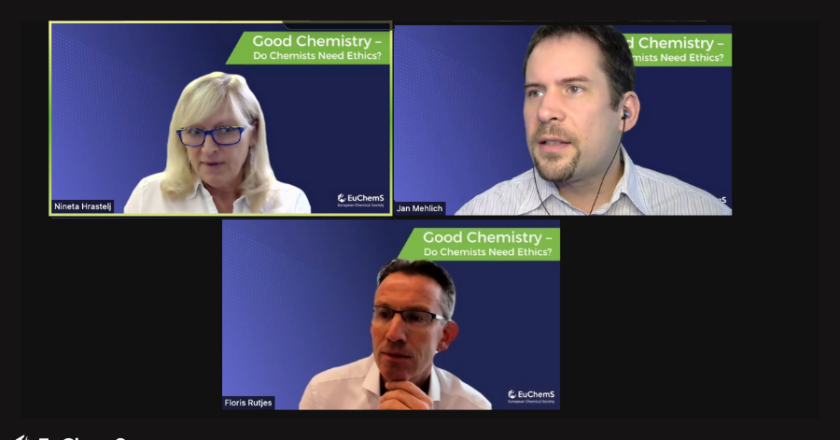
Ethics needs chemists!
On 7 October, the European Chemical Society (EuChemS) hosted the webinar ‘Good Chemistry – Do Chemists Need Ethics?” chaired by Dr. Jan Mehlich, recipient of the 2020 EuChemS Award for Service and member of the EuChemS Working Party on Ethics in Chemistry. Floris Rutjes, EuChemS President, welcomed with an opening speech the 177 attendees from 31 different countries who participated in this online event.
“EuChemS seeks to stimulate chemical education and aims to contribute to an integral education of students as important future enactors of progress and influential decision-makers in academia, industry, and the public sphere.”
– Floris Rutjes, EuChemS President,
Opening speech of the webinar ‘Good Chemistry – Do Chemists Need Ethics?’
During this interactive webinar, Dr. Jan Mehlich invited the attendees to reflect on the role of ethics in the chemical sciences through various examples and case studies. You are invited to watch the recording of this webinar on the EuChemS YouTube channel to discover all about the conclusions of this online event.
Dr. Jan Mehlich will be presented with the 2020 EuChemS Award for Service at the 8th EuChemS Chemistry Congress 2022 (ECC8) in Lisbon (Portugal) in recognition of his outstanding commitment and hard work in fostering chemistry in Europe, along with the activities and goals of EuChemS.
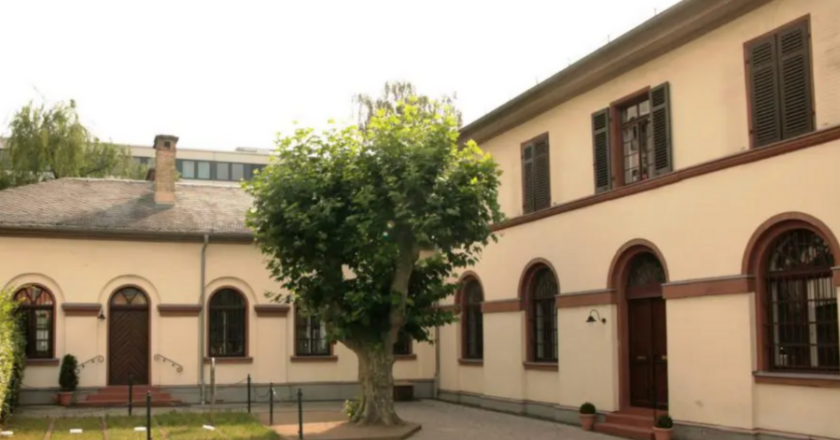
Winner announced for the EuChemS Historical Landmarks Award 2020 (European Level)
Each year, EuChemS opens a call for a Historical Landmarks Award, to recognise various sights of cultural heritage that are significant for the history of Chemistry. The 2020 EuChemS Historical Landmarks (European level) goes to the Justus Liebig Laboratory in Giessen (Germany), where Justus von Liebig worked in the 19th century. You can read more about it here.
The call for the 2021 EuChemS Historical Landmarks Award nominations is currently open until 31 December 2021 (18:00 CET). Please visit this page for more information.
Chemistry in Europe #newsletter: third issue of 2021 oriented on the future of chemistry
Earlier this month, EuChemS released the third edition of the 2021 Chemistry in Europe newsletter.
This issue includes an editorial from Slavica Ražić and Péter G. Szalay, members of the EuChemS Executive Board, in which they bring their point of view as Chairs of a EuChemS Professional Networks on the future challenges for sustainable chemistry in Europe.
For this issue of Chemistry in Europe, the new section ‘Chemistry Talks’* features an interview with Mai Thi Nguyen-Kim who was recently awarded the GDCh Prize for Journalists and Writers, and an article on paradigm shift in organic chemistry. Floris Rutjes, EuChemS President, also expresses his views on the Conference for the Future of Europe in the new “President’s column” section of this newsletter.
In addition, this issue also contains an interview with Jan Mehlich, recipient of the 2020 EuChemS Award for Service, a report from the Inaugural Meeting of the Swiss Chemical Society’s “Section Chemistry and the Environment”, an EFSA article on the European Commission’s approval of placing insects as Novel Food on the EU market, inputs from the European Young Chemists’ Network (EYCN), and many more!
You are invited to read the full newsletter here.
About Chemistry in Europe
Chemistry in Europe is a EuChemS quarterly publication mainly intended for an audience of chemists, but everyone is welcome to subscribe! Its objective is to inform about research in Europe, to provide updates from EuChemS Member Organisations, and to look into policy-related developments.
If you wish to receive your quarterly update via email, subscribe here.
*All EuChemS member organisations are invited to contact us and exchange with us their articles published in national journals (either in their native language or in English). With your cooperation, we can re-publish them in the section “Chemistry Talks” of the Chemistry in Europe newsletter, thus making them available for a wider audience.
Upcoming parallel consultations from EFSA and ECHA on Glyphosate
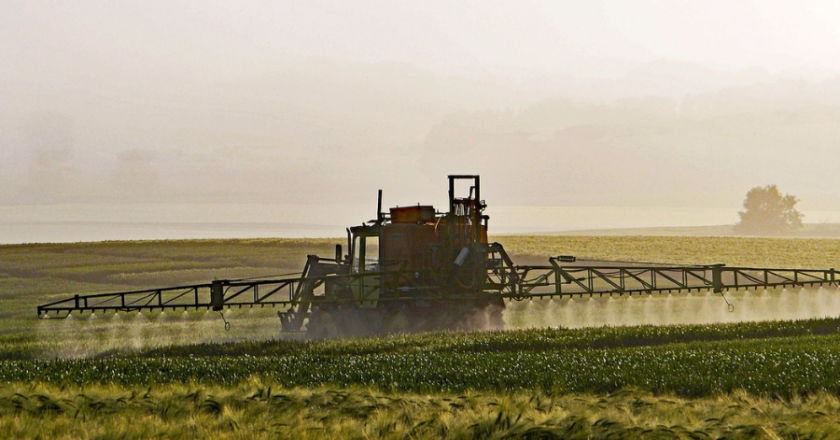
The European Chemical Agency (ECHA) and the European Food Safety Authority (EFSA) will open parallel consultations on the Renewal Assessment Report (RAR) and the Harmonised Classification and Labelling (CLH) report on glyphosate by 24 September. This step is part of the renewal process of the glyphosate which ends at the term of its authorisation in December 2022.
The draft Renewal Assessment Report (dRAR) was published on 15 June by the Assessment Group of Glyphosate (AGG) and concluded that there was a risk of causing “serious eye damage” and being “toxic to aquatic life with long lasting effects”. You can read more about it in our July newsletter.
EuChemS on Glyphosate
The European Chemical Society (EuChemS) held the workshop “Glyphosate, Harmless Tool or Sneaky Poison?” at the European Parliament in 2017. Members of the European Parliament, policymakers, and researchers discussed the toxic potential of the chemical in health, environmental and plant protection domains.
The following conclusions made were:
- Increase transparency by making Horizon 2020 funding open studies linked to ECHA and EFSA dossiers
- Formulations and not just active substance should be assessed
- Daily intake is lacking evidence, more research needed
- Rethink the long-term unconditional authorisation
- Carcinogenicity, DNA damage but also ecotoxicity needs to be studied
- Current analytical method not well defined; need for standards methods with different samples
- Awareness for excessive use of glyphosate and on the experience of users
MEPs against Horizon Europe budget cut
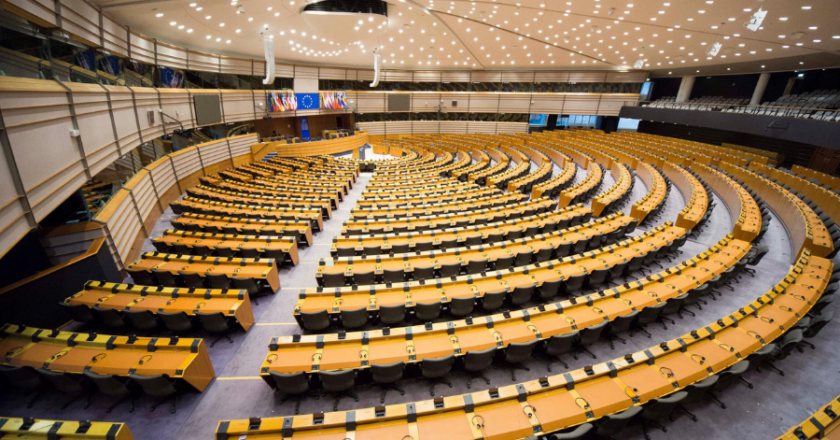
On 2 September 2021, the Members of the European Parliament of the Industry, Technology, Research and Energy (ITRE) committee gathered to discuss the 2022 general EU budget. Special focus was given to the budget cut of €316 million for the Horizon Europe programme proposed by the European Council last July.
On 15 July 2021, against all expectations, the European Council decided to reduce the budget for 2022 of the Horizon Europe programme by €316 million. At the same time, the instruments Digital Europe (digital technology programme) and InvestEU (facilitating investment programme) will also see their budget cut by €50 million and €45.5 million respectively. The main argument of the European Council was that there was not enough demand to invest in this domain.
The ITRE committee recently expressed its opinion on the topic and strongly disagreed with the budget cut proposal. To achieve the goals set for decarbonisation by 2030, research and development areas need these funds to establish a solid response.
“As expected, it is as counterproductive as it could be […] while we are still in a pandemic, the Council cuts €45 million on health research under Horizon Europe […] This completely undermines the idea that the recovery fund does additional money to boost recovery. It also is unrealistic if you are serious about the 2030 objective because those require investments now. It will be up to the Parliament to fight for a budget that delivers on recovery, resilience and the twin transition, digital and substantially.”
– Christian EHLER
Member of the ITRE Committee
Source: https://bit.ly/3E3CBWz
Conference on the Future of Europe divides EU scientists
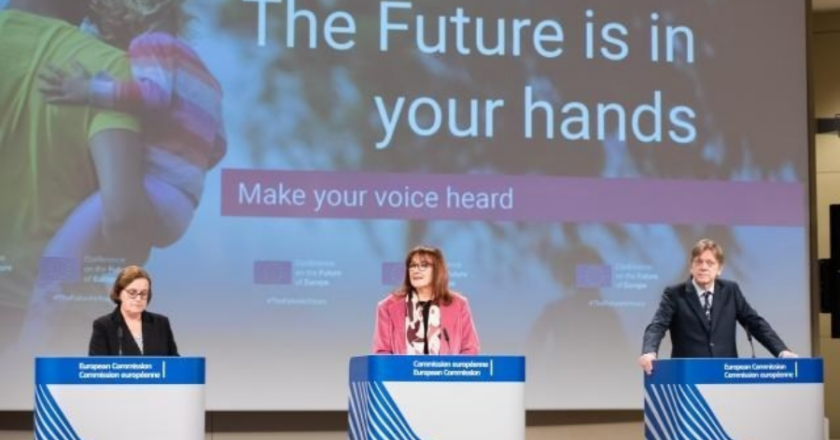
Since the launch of the Conference on the Future of Europe (CoFoE), discussions arose within the European scientific community on the omission of some leading topics within its programme.
This joint initiative of the European Parliament, the Council of the European Union, and European Commission aims at stimulating citizens to participate in shaping Europe’s future through a free, multilingual, and digital platform – designed as the “hub” of the conference – and various in-person and on-line events organised everywhere across the EU. This forum for EU-wide discussion invites registrants to debate a set of topics, which are:
- Climate change and environment
- Health
- A stronger economy, social justice and jobs
- EU in the world
- Values and rights, rule of law, security
- Digital transformation
- European democracy
- Migration
- Education, Culture, Youth and Sport
The Conference is expected to reach conclusions and provide guidance on the future of Europe by Spring 2022. The recommendations expressed through the CoFoE will be presented to the three Institutions, which will then further examine how to implement follow-up actions and turn these ideas into concrete actions.
As inclusive and ambitious this project may be, EU researchers raised their voices to denounce the exclusion of “Research and Innovation” among the 9 leading topics (listed above) of the CoFoE. Although R&I can be included in a dedicated category, namely “other”, it minimises the important contribution of scientific research in shaping Europe’s future.
The European Research Council (ERC) issued a statement denouncing this omission and to urge scientists in Europe to participate actively in the Conference to make their voices heard. Martin Andler, President of Initiative for Science in Europe (ISE) of which EuChemS is an observer member, addressed the Presidents of the three institutions, EU Commissioner for Innovation, Research, Culture, Education and Youth Mariya Gabriel and the Co-chairs of the Executive Board of the CoFoE, Guy Verhofstadt, Ana Paula Zacarias and Dubravka Suica in a letter to alert them about this omission and its consequences for the scientific community.EuChemS President,
Floris Rutjes, also expressed his concerns and invited the European Chemistry community to take part in the CoFoE, in the most recent issue of EuChemS quarterly newsletter Chemistry in Europe:
“The current pandemic, the climate crisis (the recent IPCC report has shown that the situation is more alarming than we perhaps imagined), and the waste problem – to name a few global challenges – will require significant investments in research and innovation in different scientific areas, thereby unlocking the immense potential of Europe’s researchers. Their contributions are needed to realise fundamental sustainable and digital transitions and at the same time keep Europe operating at the forefront of science in the highly competitive international arena.”
– Floris Rutjes
EuChemS President
Source: https://bit.ly/2YGqNtj
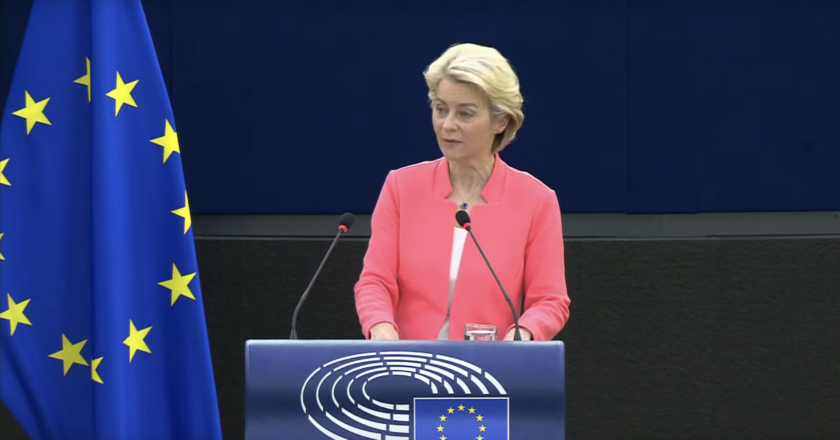
State of the Union 2021: the EU tested by COVID-19
On 15 September 2021, the President of the European Commission, Ursula von der Leyen, conducted her yearly speech “State of the Union” in a plenary at the European Parliament.
President von der Leyen presented a summary of the past year and started by congratulating Europe for its efforts in fighting the coronavirus outbreak. She reported that more than 70% of the European population is now vaccinated and the NextGeneration EU is poised to foster resilience across the EU. Digital improvements have been made, such as the vaccine certificate valid all over the EU . She recognised the effort seen from the younger generation during the pandemic and proclaimed the year 2022 as the “year of the youth”.
Moreover, she announced new measures related to COVID-19 resilience such as the new health strategy backed up with €50 million by 2027. Innovation and independence were also highlighted in her speech, as well as climate change: the funding for biodiversity will be doubled and the Conference of Parties (COP26) is expected to be groundbreaking with regards to carbon neutrality and environment-related policies next November in Glasgow, Scotland.
“We have together turned our climate goals into legal obligations, and we are the first major economy to present comprehensive legislation in order to get it done[…] The goal is simple: to put a price on pollution. We will clean the energy we use. We will have smarter cars and cleaner airplanes and we will make sure that higher climate ambition comes with more social ambition”
– Ursula von der Leyen
President of the European Commission
Source: https://bit.ly/3kilWqJ
Members of the European Parliament from all parties took the floor to express their position on President von der Leyen’s speech. Main critics from the MEPs were targeting the lack of real actions taken by the European Commission regarding the promises they made.
You can watch the full plenary here.
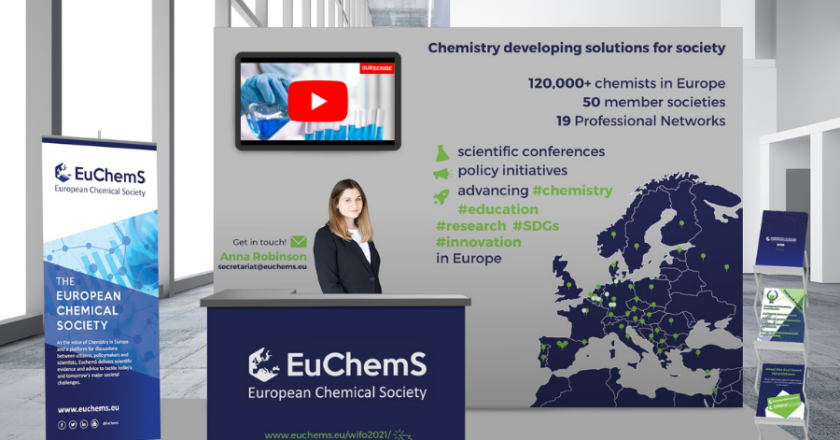
EuChemS @ #WiFo 2021
From 29 August to 1 September, EuChemS had the pleasure to join the GDCh Science Forum Chemistry (WiFo) as an exhibitor which was for the first time organised entirely online. GDCh President, Professor Dr. Peter R. Schreiner, welcomed the participants during the WiFo Opening Ceremony on 29 August and presented the programme of the Congress, together with Professor Dr. Peter Gartner, President of the Austrian Chemical Society (GÖCH).
During the opening ceremony, Professor Dr. Petra Mischnick received the Hildegard Hamm Brücher Prize for Equal Opportunities in Chemistry. Additionally, Professor Dr. Evamarie Hey-Hawkins gave a lecture “From Phosphorus Compounds and Materials to Biological Applications of Carboranes” and received the Karl Ziegler Prize. EuChemS congratulates all the GDCh awardees and is pleased that Professor Dr. Barbara Albert, former chair of the International Award Committee for the EuChemS Lecture Award (IACL), handed to Professor Dr. Evamarie Hey-Hawkins the award. In 2020, Professor Dr. Evamarie Hey-Hawkins gave a talk on “Phosphorus, an essential element to feed the world” during the workshop The value is on circularity – Recycling-reusing-reinvesting on critical raw materials co-organised by EuChemS and MEP Maria Spyraki.
Other prestigious GDCh prizes have been awarded, such as the GDCh Prize for Journalists and Writers to Dr. Mai Thi Nguyen-Kim. During this digital event, registrants also had the opportunity to attend various conferences from the scientific programme, including discussions on various international top research topics such as infections, energy, sustainability, and climate. In addition, a poster session and a job fair enabled young scientists to present their research.
WiFo 2021 was also a great opportunity for networking as the digital conference platform offered participants direct chat and video functions. Furthermore, the virtual exhibition enabled companies and institutions to present themselves, including EuChemS, thus offering many opportunities for networking. Registrants interacted with the EuChemS team through its virtual booth. For this occasion, EuChemS also set up a webpage to provide the registrants of WiFo 2021 with the most up-to-date information on the latest chemistry-related and science-policy news, awards, and upcoming events in Europe and beyond.
You can visit the webpage “EuChemS @ WiFo 2021” here.
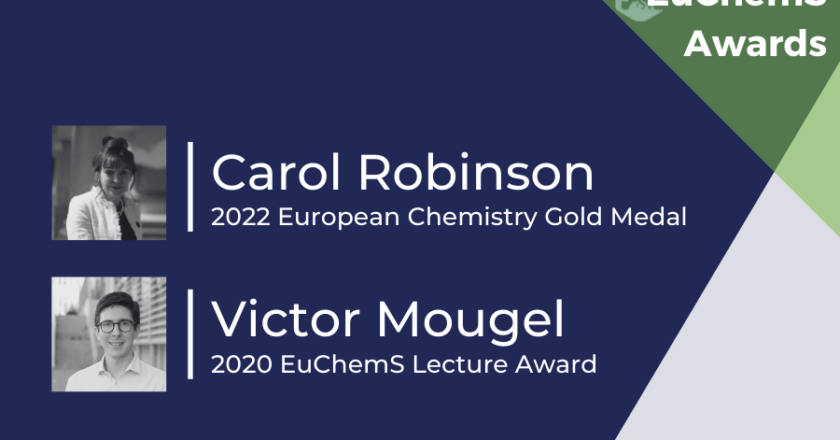
Meet the recipients of the 2022 European Chemistry Gold Medal and the 2020 EuChemS Lecture Award
We are pleased to announce that the 2022 European Chemistry Gold Medal has been awarded to Professor Dame Carol Robinson and that Professor Victor Mougel is the recipient of the 2020 EuChemS Lecture Award.
On behalf of all of us at EuChemS: congratulations!
Professor Dame Carol Robinson was awarded the 2022 European Chemistry Gold Medal for exceptional achievements in the field of chemistry in Europe. She is globally recognised as a leader in the development of mass spectrometry to understand the 3D structure of large molecular compounds, specifically carrying out ground-breaking research on protein folding, ribosomes, molecular chaperones, and membrane proteins. Her cutting-edge work finds many applications from antibiotic resistance to drug design in both academia and industry.
You can read more about the career of Professor Dame Carol Robinson here.
The 2020 EuChemS Lecture Award has been awarded to Professor Victor Mougel for major achievements in chemistry as a junior scientist. He has made fundamental and application-driven contributions to his field, specifically through the development of efficient bio-inspired electrocatalytic CO2 reduction, constituting an important step towards more sustainable energy storage and conversion.
If you wish to discover more about the achievements of Professor Victor Mougel, click here.
Both are invited to present their research at the 8th EuChemS Chemistry Congress (ECC8) in 2022, where they will also receive their prize.