


Submit your nomination HERE.
Deadline: 31 December 2021
2021 EuChemS Award for Service
Submit your nomination HERE.
Deadline: 31 December 2021
2021 EuChemS Lecture Award
Submit your nomination HERE.
Deadline: 31 December 2021
European Food Safety Authority (EFSA) public consultations
A number of consultations put forward by the European Food Safety Authority (EFSA) are currently open.
- Assessment Report on the active substance Glyphosate
Deadline: 22 November 2021
- Phthalates: draft opinion and exposure protocol open for public consultation
Deadline: 16 December 2021
You can take a look at it all here.
EuChemS is an official accredited stakeholder of the European Food Safety Authority (EFSA).
European Chemicals Agency (ECHA) public consultations
A number of consultations put forward by the European Chemicals Agency (ECHA) are currently open.
- Consultation on OEL proposal
Deadline: 26 November 2021
You can take a look at them here.
EuChemS is an official accredited stakeholder of the European Chemicals Agency (ECHA).
European Commission Public Consultations and Roadmaps
A number of consultations and roadmaps put forward by the European Commission are currently open:
- Air quality – Revision of EU rules (public consultation)
Deadline: 16 December 2021 - Revision of the EU general pharmaceuticals legislation (public consultation)
Deadline: 21 December 2021 - Digitalising the energy sector – EU action plan (public consultation)
Deadline: 24 January 2022
Studying Sustainable Chemistry in Germany
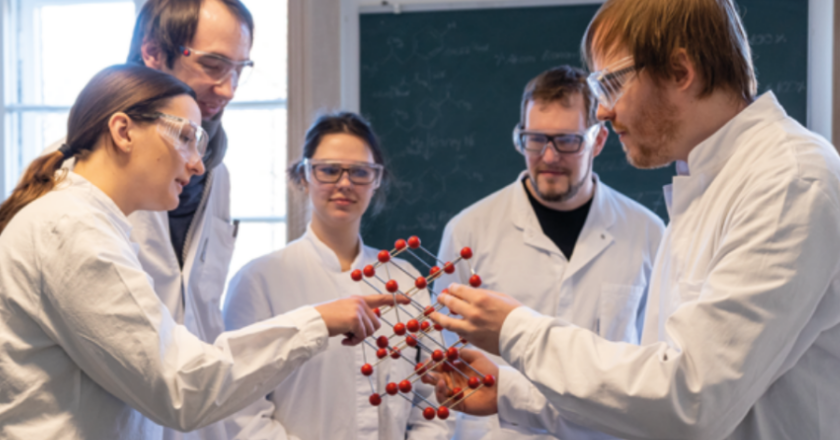
The Leuphana University in Lüneburg, Germany, is offering a Professional Master’s Programme in Sustainable Chemistry M.Sc. tailored for working professionals with a background in chemistry. For 4 semesters, students will be taught how to understand and apply chemistry in the context of sustainability.
This programme, offered in English, enables working professionals to pursue their career while continuing higher education. In place since 2020, it was recently listed among the SDGs Good Practices by the United Nations (UN) for its active contribution to the achievement of SDGs 4, 9, 12 and 17.
If you wish to discover more about this master programme, the Leuphana University is organising an “Online Info Session Application & Admission“ on 25 November 2021. The programme will start in March 2022, and the deadline for application is 10 December 2021.
Download here the flyer for more information.
The Leuphana University will also launch in March 2022 another Master programme, which is the MBA Sustainable Chemistry. It is open for students with different disciplinary background and focuses on sustainability-oriented management in various sectors connected to the chemical enterprise. More information about it is available here.
Women and Girls in STEM Forum: a step closer to gender equality?
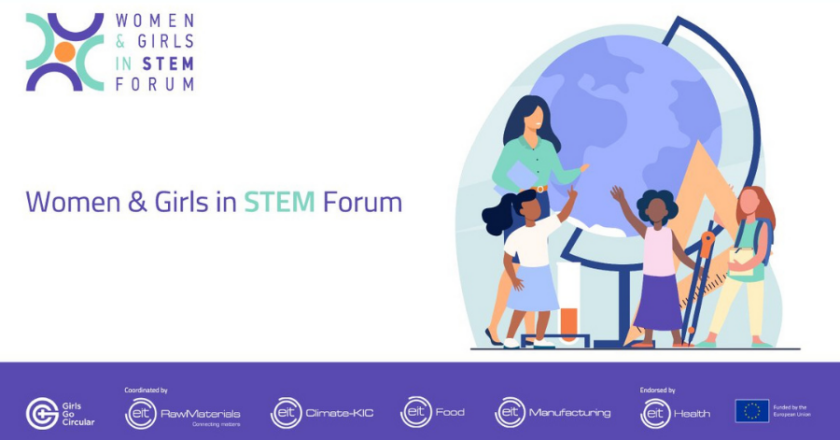
On 28 October, the Girls Go Circular initiative, in collaboration with the European Commission, Directorate-General for Education, Youth, Sport and Culture (DG EAC), organised the first edition of the Women and Girls in STEM Forum.
This online forum gathered researchers, professionals, and stakeholders in STEM and equal opportunities to discuss the challenge of eliminating gender bias and achieving gender equality in digital and STEM-related disciplines. They highlighted gender gaps in leadership, pay and investment, and the importance of peer support and role models. The aim was to inspire future policy actions in the European Union on these topics. More than 1,000 people registered for this online event and had the opportunity to exchange with the speakers, mentors, and their peers.
Mariya Gabriel, Commissioner for Innovation, Research, Culture, Education and Youth, opened the Women and Girls in STEM Forum and invited the attendees to join the upcoming editions, including the one that will be held next year. Stay tuned!
More information about the Women and Girls in STEM Forum is available here.
More collaboration on Intellectual Property to ensure market uptake of research results within the EU
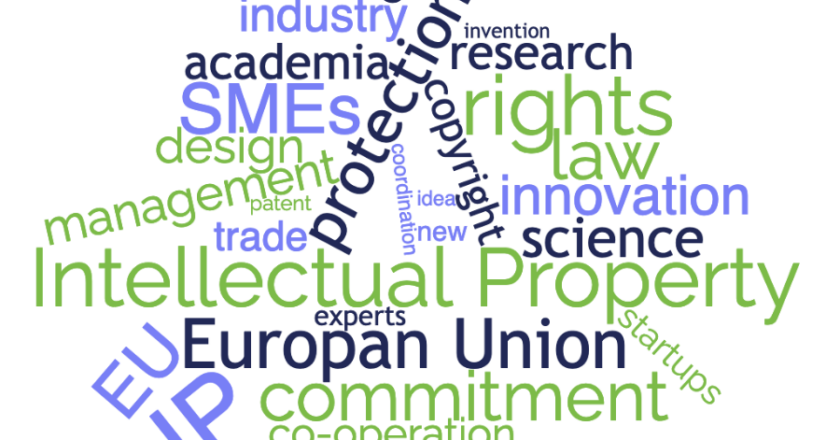
On 10 November, the European Commission Directorate General Research and Innovation (DG RTD), the European Innovation Council (EIC), SMEs Executive Agency (EISMEA), and the European Union Intellectual Property Office (EUIPO) signed a letter of intent for co-operation on intellectual property (IP) management.
This commitment will enhance efforts of coordination between all parties in the field of IP management. It will come to support the objectives of the European Research Area (ERA) to ensure the EU’s competitive leadership in R&I and the market uptake of research results.
This initiative will translate to the implementation of various activities, such as awareness raising actions on IP, measures to support SMEs in the economy, and upcoming IP policies development.
More information is available here.
Experts call for a more ambitious Fit for 55 package
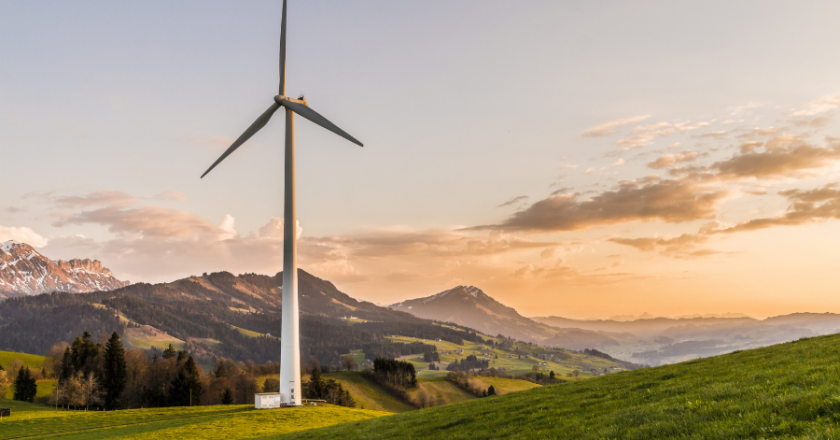
The energy aspects of the “Fit for 55 package” have been discussed during a public hearing organised by the European Parliament Committee on Industry, Research and Energy (ITRE) on 9 November.
Members of the ITRE Committee exchanged views on this topic with experts from academia, industry, and NGOs, who called for a more ambitious Fit for 55 package. The focus was on the revision of the Energy Efficiency Directive and the Renewable Energy Directive.
The recording of the public hearing is available here.
As a reminder, the Fit for 55 package is an initiative expected to provide the EU with tools to meet the Green Deal’s objectives, comply with the European Climate Law, and keep its Paris Agreement commitments launched by the European Commission in July 2021. You can read our complete debrief in the August issue of our Brussels News Updates (BNU) newsletter.

New limits for organic pollutants in waste
On 28 October, the European Commission adopted a proposal to eliminate Persistent Organic Pollutants (POPs) present in waste. The proposal, in line with the Chemicals Strategy for Sustainability, tightens the limits for these harmful chemicals in waste: as POPs can still be found in waste, they may re-enter the economy when it is recycled and the resulting materials are used in new products.
POPs are toxic chemicals that accumulate in the food chain and remain in the environment for a long period of time. With this proposal, the European Commission wants to prevent harming human health and to protect the environment, thus delivering on the European Green Deal.
The following three substances (or group of substances) are targeted in the proposal:
- perfluorooctanoic acid (PFOA) and its salts and related compounds;
- dicofol;
- pentachlorophenol, its salts, and esters.
POPs – not as charming as they sound‼️
Today we adopt new limits for Persistent Organic Pollutants – some of the most harmful chemicals in waste.
This way we can protect better human health and help our environment be toxic-free! ⤵️https://t.co/dbwHwRf4h2 pic.twitter.com/Ut9zmIgivA
— Virginijus Sinkevičius (@VSinkevicius) October 28, 2021
From EU institutions to COP26, methane is under the microscope
On 21 October, members of the committee on the Environment, Public Health and Food Safety (ENVI) adopted a resolution on the EU strategy to reduce methane emissions and called on the European Commission to present actions and targets to reach this goal by 2030. The ENVI committee also called for a binding global agreement on methane at COP26, held from 31 October to 12 November in Glasgow.
Methane is the second largest contributor to the climate crisis: over a short-term period, it is about 80 times more potent at warming the climate than carbon dioxide. As most methane emissions come from human activities – mainly from the agricultural, waste, and the energy sectors – MEPs asked for a mandatory monitoring, reporting and verification of these sectors and emphasised the need to implement methane leak detection and repair programmes.
You can read the ENVI Committee press release here.
On 2 November, the European Union and the U.S. launched during COP26 the Global Methane Pledge, an initiative to cut methane emission by 30% by 2030. 103 countries signed this pledge, representing 70% of the global economy. According to EU estimates, delivering on the Global Methane Pledge could reduce projected warming by 0.2 degrees Celsius by 2050 and prevent over 200,000 premature deaths as methane contributes to ozone formation causing air pollution and thus serious health problems.
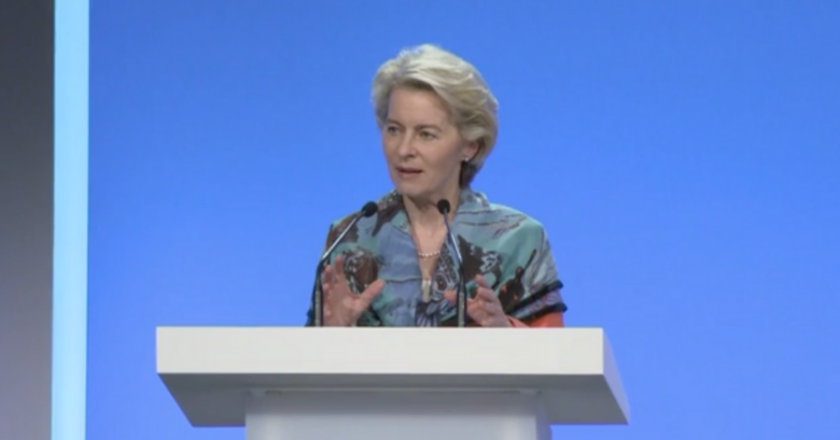
“Methane emissions come from various sources, we all know: oil, gas, coal, agriculture, and landfills. These sectors have different potential for short-term action. The greatest potential for cuts is, without any doubt, in the energy sector. This is why, next month, us, the European Commission, we will propose to regulate methane emissions. We will introduce rules to measure, to report, to verify methane emissions, rules to put limits on venting and flaring, and rules to detect leaks and repair them. And of course our Common Agricultural Policy is also increasing its focus on tackling methane emissions.”
– Speech by European Commission President von der Leyen on the launch of the Global Methane Pledge
2 November 2021, COP26 Glasgow, UK
The pledge came without the participation of the top three world methane emitters – China, India, and Russia.
On the eve of COP26, the European Commission launched the International Methane Emissions Observatory (IMEO) during the G20 Summit. This initiative aims at driving global actions in reducing methane emissions, starting with the energy sector. It will ensure public transparency on anthropogenic methane emissions.
Nicola Armaroli, a EuChemS Executive Board member, addressed the issue of Methane leakage during an online event on Wednesday 3 November, held during the COP 26. During his presentation, he pointed out that methane is not only a climate problem, but also a local air pollution issue that shall be tackled. He also discussed methane waste management. You can watch his talk here.
EuChemS Awards nomination process explained in 7 minutes!
EuChemS organised on 9 November an online Information Session on its Awards. The event was opened by Floris Rutjes, EuChemS President. During this webinar, the nomination procedures and selection process for each EuChemS Award were presented by Laura Jousset and Anna Robinson, while chairs of respective Selection Committees provided the attendees with tips and advice and answered their questions.
Nineta Hrastelj, EuChemS Secretary General, who moderated this Information Session, invited the participants to contact the Secretariat at awards@euchems.eu, should they have any questions.
Currently, four calls for the EuChemS Awards are open until 31 December 2021 (18:00 CET). Short videos summarising the procedures for these awards are available on the EuChemS YouTube Channel. These videos were shown during this online Information Session and each last up to 7 minutes.
EuChemS discussing green and sustainable chemistry
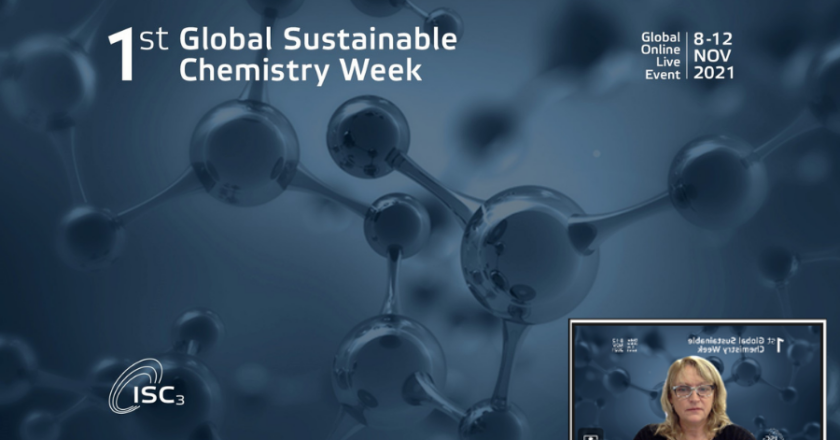
Various chemistry events focusing on sustainability were organised this month. As an important contributor to this topic, the European Chemical Society took part in the discussion on green and sustainable chemistry by participating in two major events: the first “Global Sustainable Chemistry Week” and the “6th Green & Sustainable Chemistry Conference”.
1st Global Sustainable Chemistry Week
On 12 November, Nineta Hrastelj, EuChemS Secretary General, joined a panel discussion on the EU Chemicals Strategy on Sustainability during the first “Global Sustainable Chemistry Week” – organised by the International Sustainable Chemistry Collaborative Centre (ISC3).
Nineta Hrastelj addressed four major points from the EU Chemicals Strategy on Sustainability: the challenges towards its harmonised implementation across the EU, the importance of strengthening science-policy discussion, also at the regional level, the need for the EU’s strategic independence, and the crucial role of education. She concluded her presentation on the opportunities offered by the EU Chemicals Strategy on Sustainability, including how it can enable EU citizens to better understand the role of science in their everyday life.
6th Green & Sustainable Chemistry Conference
On 16 November, Floris Rutjes, EuChemS President, gave an opening address at the 6th Green & Sustainable Chemistry Conference organised by Elsevier.
During his talk, he presented the main activities that EuChemS is involved in relating to green and sustainable chemistry, which include:
- EuChemS joining the European Commission’s High Level Roundtable on the implementation of the Chemicals Strategy for Sustainability;
- the many EuChemS replies to the European Commission public consultations related to sustainable chemistry;
- the recent updates made to the EuChemS Periodic Table.
In addition, he discussed the role Chemistry plays in the UN 17 SDGs.
The new colour of Carbon in the EuChemS Periodic Table
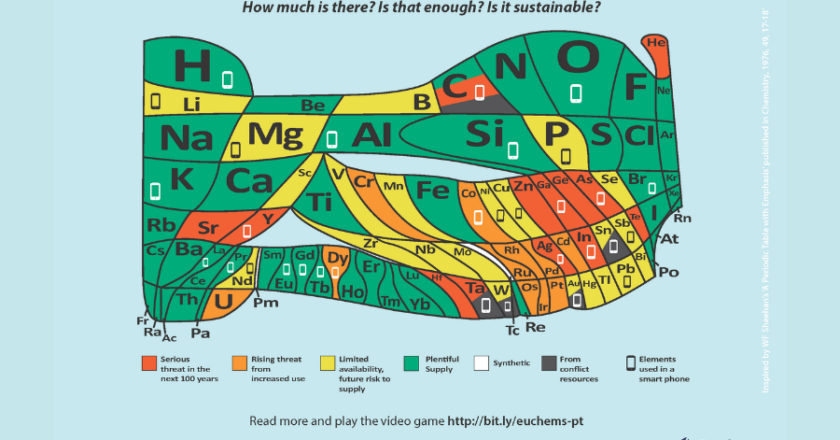
On 3 November, the European Chemical Society (EuChemS) released an updated version of its iconic Periodic Table, first produced for the International Year of the Periodic Table in 2019 (IYPT19).
Conceived as a living document, to be periodically updated in the light of technological, societal, and geopolitical developments – which may affect the availability or status of specific elements – this unique periodic table highlights the availability and vulnerability of elements to raise society’s awareness of the limited mineral resources of our planet.
In view of the conclusions drawn during the successful Workshop, The Carbon Element – key towards a sustainable society, and after considerable scientific discussion, the colour of carbon in the EuChemS Periodic Table has been changed from green to partially green, red, and grey, denoting plentiful supply, a serious threat in the next 100 years, and elements from conflict minerals respectively.
This multi-colour coding of the carbon element reflects its distinctive position at the crossroads of a very large natural cycle and a very large anthropogenic usage with considerable geo-strategic stakes – as a major component of oil, carbon was and is connected to several armed conflict worldwide.
By updating the colour of the carbon element in its Periodic Table, EuChemS wants to address issues surrounding this specific element, such as the carbon cycle, fossil fuel reserves, recycling, and the need for a transition in the energy sector.
Read more about it here.
MSCA Conference 2021
MSCA Fostering Balancer Mobility Flows in Europe
15 –16 November 2021
Online and Ljubjana, Slovenia
Website: https://bit.ly/3Dspz3K
COP26: What are the implications for global R&D?
Organised by ScienceBusiness
15 November 2021
Webcast
Website: https://bit.ly/2Yx2yNT
Annual Research Conference
‘Charting the European economy post COVID 19: unusual times require unconventional policies’
co-organised by the Directorate-General for Economic and Financial Affairs (DG ECFIN) and the Joint Research Centre (JRC)
15 November 2021
Online
Website: https://bit.ly/3CZQEen
1st Global Sustainable Chemistry Week 2021
8 – 12 November 2021
Online
Website: https://bit.ly/30ndn6t
Women and Girls in STEM Forum
Organised by Girls Go Circular, in collaboration with the European Commission, Directorate-General for Education, Youth, Sport and Culture (DG EAC)
28 October 2021
Online
Website: https://bit.ly/3miWnoW
XXI EuroFoodChem
XXIst edition of EuroFoodChem
From Monday 22 November to Wednesday 24 November 2021
Online
Website: https://bit.ly/3hcmjAS
2nd Carbon Dioxide Conversion Catalysis Virtual Conference
From Monday 8 November to Tuesday 9 November 2021
Online (UK time – UTC+1)
Website: https://bit.ly/3l2MxqB
Sustainable Chemistry Lecture Series – SCLS
19 October 2021
Online
Registration link: https://bit.ly/3AKYjMt
EuChemS Awards – Information Session 2021
Following the successful first edition held in 2020, the European Chemical Society (EuChemS) is organising an Information Session on its Awards on Tuesday 9 November, from 14:00 to 15:30 CET. The webinar will be held on the platform Zoom.
Registration for this event is now open ➡️ REGISTER HERE
Please note that online registration is mandatory.
During this Information Session, you will be introduced to 5 EuChemS Awards:
European Chemistry Gold Medal
EuChemS Lecture Award 📢
EuChemS Award for Service 📢
EuChemS Historical Landmark Awards 📢
European Young Chemists’ Award (EYCA)
This Information Session is for those who are eligible to submit a nomination to one of the EuChemS calls currently open, and for those who are just curious to discover more about how EuChemS recognises research undertaken in the chemical sciences.
Read more about this online event here.
MSCA Calls
Four Marie Skłodowska-Curie Actions (MSCA) calls for funding are open:
- MSCA Doctoral Networks 2021
Deadline: 16 November 2021 - MSCA Researchers at Risk 2021
Deadline: 6 January 2022 - MSCA Cofund 2021
Deadline: 10 February 2022 - MSCA Staff Exchanges 2021
Deadline: 9 March 2022
You are invited to take a look at them here.