


2 – 4 May 2018
Porto, Portugal
Website: https://www.fc.up.pt/spe2018/
EuCheMS Award for Service
Deadline: 31 May 2018
Website: https://bit.ly/2FTLVC4
EuCheMS Historical Landmarks
Deadline: 30 April 2018
Website: http://www.euchems.eu/new-award-euchems-historical-landmarks/
European Food Safety Agency (EFSA)
Deadline: see projects list here
Website: http://www.efsa.europa.eu/en/calls/art36grants
Third Programme of the Union’s action in the field of health
Deadline: 26 April 2018
Website: http://bit.ly/2CMDUbB
4th EUA Funding Forum – call for contributions
The European University Association has opened the call for contributions to the Fourth EUA Funding Forum. The event will be hosted by Ramon Llull University on 18 and 19 October in Spain. Contributions are sought from researchers focusing on higher education and research funding, and should relate to university funding and management. Take a closer look here.
Deadline: 30 April 2018
Roadmap on promoting automatic mutual recognition of diplomas and study periods abroad
As part of the European Commission proposal for the creation of a European Education Area, a Council Recommendation on promoting the automatic mutual recognition of higher education and upper secondary education qualifications and study periods within the EU has been put forward. The objective is to have Member States put into place procedures that will simplify and improve mobility of students, teachers and research through automatic mutual recognition of qualifications.
Share your views!
Deadline: 17 April 2018
Roadmap on protecting citizens against health threats
The risk of outbreaks of highly infectious diseases will continue to increase and hit ever wider areas as mobility, urbanisation and the environment continue to change. The EU is currently looking at how to better counter these threats, and coordinate research and crisis management across the Member States. Two mutually reinforcing capabilities have been put forward: ‘the EU capacity for public health, food safety and animal health preparedness and response to those threats, and the EU capacity for targeted and coordination research and innovation to deliver effectively and timely with successful therapeutic and prophylactic countermeasures, including new medicines’. Your scientific and expert feedback on the Commission’s Communication is wanted – don’t disappoint them!
Deadline: 23 April 2018
Social benefits of nuclear and radiation technologies
On 20-21 March, the European Commission hosted a conference to identify the cross-cutting actions it, and stakeholders, could take, ‘to maximise the societal benefits of nuclear and radiation technologies, whilst providing high standards of quality and safety to European citizens’. The conference, with keynote speakers such as Climate Action and Energy Commissioner Miguel Arias Cañete, Health and Food Safety Commissioner Vytenis Andriukaitis, and Director General of the International Atomic Energy Agency (IAEA) Yukiya Amano, sought to facilitate discussions between stakeholders, experts and institutions with the aim of contributing to the Commission’s general legislative work on this subject. More info here.
For more information on EuCheMS’ work on the subject, visit our Division of Nuclear and Radiochemistry page.
Research, innovation and European cultural heritage
A high-level Horizon 2020 conference organised by the European Commission spotlighted the latest innovations in the field of cultural heritage supported by EU funding instruments. The conference demonstrated the crucial link between preserving cultural heritage and scientific research and innovation, whether in the form of engineering and structural repairs, 3D laser scanning, or neutron resonance analysis for archaeological applications.
But chemistry and Cultural Heritage are also linked in other ways. Chemistry has been an integral part of Europe’s cultural makeup, and for this reason, EuCheMS decided to set up its Historical Landmarks Programme, which will reinforce the sense of belonging of European chemists and showcase to the public the role chemistry plays in our cultural heritage. Know a historical landmark that ought to be better recognised for its links to chemistry? You have two weeks left to submit your proposal! You can read the guidelines for the award here.
Interested in Chemistry and Cultural Heritage? Join the 5th International Congress Chemistry and Cultural Heritage in Bucharest, Romania on 3 – 7 July 2018!
The not so innocent rubber duck
A study by the Swiss Federal Institute of Aquatic Science and Technology, ETH Zurich and the University of Illinois, found that ‘’potentially pathogenic bacteria’’ could be found inside rubber ducks, The Guardian reports. The study points to low quality polymers in the plastic ducks as providing nutrients for the bacteria, of which Legionella and Pseudomonas aeruginosa were also found – posing a serious risk to children’s health.
With World Health Day, held under the auspices of the World Health Organisation (WHO) just a few days ago, we can take stock of the multitude of areas in which chemistry is playing a vital role in improving health conditions. EuCheMS took the opportunity to focus once more on the role of Trans Fatty Acids in our diet as well as the continued danger of antibiotic resistance. For more health-related issues, keep an eye out for the EuCheMS-EFMC session at the EFMC congress in Ljubljana (in September) and check out the 7th EuCheMS Chemistry Congress programme! 
Research sheds light on non-antibiotic drugs promoting antibiotic resistance
A study published in Nature by the European Molecular Biology Laboratory in Heidelberg has revealed a phenomenon by which gut bacteria can become resistant to antibiotics through contact with drugs not intended to harm bacteria. The study demonstrated that drugs such as omeprazole, antihistamines, painkillers and blood-pressure pills, could induce antibiotic resistance. The gut bacteria seem to therefore employ a similar defence mechanism with a wide range of drugs. You can read the Economist’s article here.
The issue of antimicrobial resistance (that is, the ability of microorganisms to withstand attack by antimicrobial drugs such as antibiotics) has been greatly focused on by EuCheMS. The dangers posed to public health that this resistance causes is the reason why we have included it in one of our ‘Missions’ for the Future Framework Programme 9. EuCheMS also held a joint European Parliament STOA and EFMC workshop on Solving Antibiotic Resistance, chaired by MEP Paul Rübig. For more on our position, take a look at our answer to the European Commission’s Public Consultation on antimicrobial resistance.
European Parliament Public Hearing: impact of endocrine disruptors on public health
On 22 March, a public hearing organised by the European Parliament’s Environment Committee and the Petitions Committee looked at the impact of endocrine disruptors on public health and the environment. Endocrine disruptors, usually found in pesticides, metals, additives and contaminants in food, are chemicals that can interfere with our endocrine and hormonal systems and which can cause cancerous tumours, birth defects and other disorders (see the World Health Organisation’s info page). A recent high number of petitions on the subject led to the Parliament’s decision to hold the hearing and discuss the EU’s regulatory actions, as well as what scientists are currently saying on the subject. In October 2017, the Parliament had blocked plans proposed by the European Commission to exempt some pesticides from being identified as endocrine disruptors.
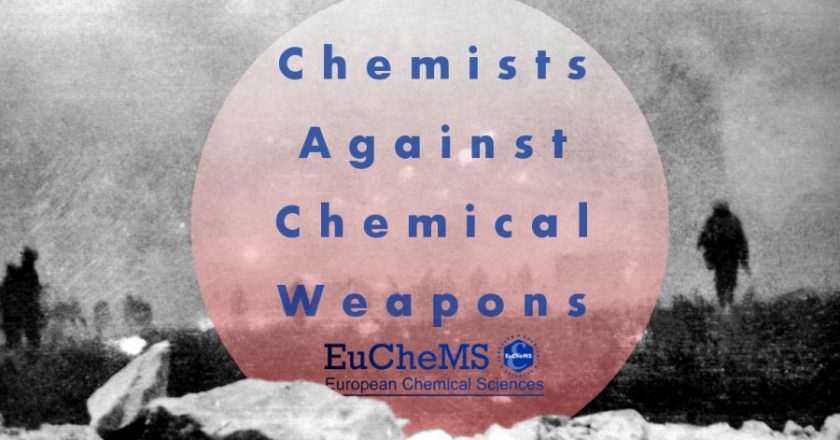
EuCheMS issues statement condemning the use of any and all chemical weapons in Syria
Following recent developments in the Syrian conflict, EuCheMS has issued a statement deploring the use of any and all chemical weapons in Syria. We reinforce our commitment to the declaration we issued in Seville in 2016, since unfortunately our statements then are even more urgent today. The EuCheMS Seville declaration states: “We, the Member Societies of the European Association for Chemical and Molecular Sciences (EuCheMS), deplore the use of chlorine in the Syrian conflict or any other and call upon the international community to bring to justice those responsible for the misuse of chlorine.” The declaration was signed by 36 Presidents of Chemical Societies or their representatives from all over Europe. The Press Release is available here and the Seville declaration is available here.
ERC Advanced grants announced
The European Research Council has announced a total of €653 million worth of funding, that will benefit 269 senior researchers and their teams across Europe as well as creating an estimated 2,000 postdocs, PhD students and other staff positions. The research projects are vastly diverse, and in the words of Carlos Moedas, European Commissioner for Research, Science and Innovation, ‘’ground-breaking’’ and ‘’high-risk’’. You can browse some examples of planned research projects here.
Worry over drop in vaccination rates
14,451. This was the total number of measles cases across Europe in 2017, triple the figure of 2016. In addition to this worrying number, there has been a steady drop in vaccination rates across the continent. The European Parliament’s environment committee expressed concern over the falling rates and highlighted the risk this could have on public health. A draft resolution published in March lays out a series of aims, including the need to restore confidence in vaccinations through greater transparency and to support joint procurement of vaccines (the cost of a full vaccines package for a child was 68 times more expensive in 2014 compared to 2001).
The World Health Organisation states that vaccinations save two to three million people every year – and if usage was increased, could save another 1.5 million. The measles outbreak in Europe last year hit Romania and Italy hardest, the latter counting some 5000 cases, including four deaths. The numbers are a cause for concern and invite a reflection on the growing scepticism – and blatant distrust, of scientific advice. The focus on rolling back compulsory vaccinations in the Italian election campaign exemplifies the brushing aside of scientific knowledge and advice to suit political motives. This has also given rise to a growing number of conspiracies or bogus research, often claiming that vaccines are the cause of severe and irreversible side effects or other health issues.
As the voice of Chemistry in Europe, EuCheMS, its Members, and the scientific community represented, has a special responsibility in this respect. Inaccuracies, fabrications and falsehoods that are circulated for political or other reasons, have to be constantly repudiated and corrected. Scientists have a duty to share their knowledge, and as such, allow citizens and policy makers to make informed decisions on such topics. But the responsibility works both ways: policy-makers in turn have, as part of their professional responsibility, a duty to seek scientific knowledge and advice in order to make informed decisions.
Implementation Roadmap for the European Open Science Cloud
The European Commission adopted on 14 March 2018 the Implementation Roadmap for the European Science Cloud. The background: the European Open Science Cloud (EOSC) projected to be implemented by 2020, will create a virtual space for all researchers to share and store data for research and innovation, helping to encourage open science in Europe. The latest document presents ‘the outcome of the exploration of appropriate governance and financing mechanisms for the European Open Science Cloud’ as well as describing ‘the measures taken under Horizon 2020 Work Programmes to start implementing the EOSC’. The document’s purpose is moreover to act as a further stepping stone for consultations with EU Member States, the European Parliament and relevant stakeholders.
#WorldWaterDay
On 22 March, World Water Day was observed worldwide to highlight the importance of freshwater in our lives. Clean, accessible drinking water for all is a basic human right, while maintaining an adequate water supply is essential for agricultural productivity. Yet with humanity’s growing needs, the strain on available water is going to continue to grow to crisis levels. To put this into perspective: while 71% of the Earth’s surface is covered in water, 97% of it is saline. The 3% remaining freshwater is 90% locked in glaciers, leaving just 0.3% of the Earth’s total water to meet these growing needs.
Chemistry has a vital role to play, both in developing processes to treat water and making it potable as well as by removing contaminants from wastewater and industrial waste streams. Water treatment being highly energy intensive in turn means that solutions need to be found to make such processes more efficient, environmentally-friendly and economically accessible. The chemical sciences therefore have a manifold role to play in providing solutions to these challenges which will continue to grow over the coming years. EuCheMS has placed water as one of its core aims in its Roadmap, available here.
On 1 February 2018, the European Commission adopted a proposal for a revised drinking water directive which aims to improve the quality of drinking water and provide greater access and information to citizens. EuCheMS had responded to the preceding consultation which can be accessed here.
EuCheMS responds to public consultation on ‘Missions’ in FP9
EuCheMS has responded to the European Commission’s public call for feedback on the implementation of Missions within the future research Framework Programme (FP9). EuCheMS highlighted a number of issues that need to be addressed as soon as possible, including, finding solutions on ‘Sustainable Low Carbon Energy for All’, ‘Forming a fit-for purpose Food Landscape’, ‘Enabling our Ageing Population’, and ‘Averting an Antimicrobial Resistance Apocalypse’. A funding instrument that recognises these priorities, and that recognises the role science can play in providing solutions is crucial. Read our feedback here.
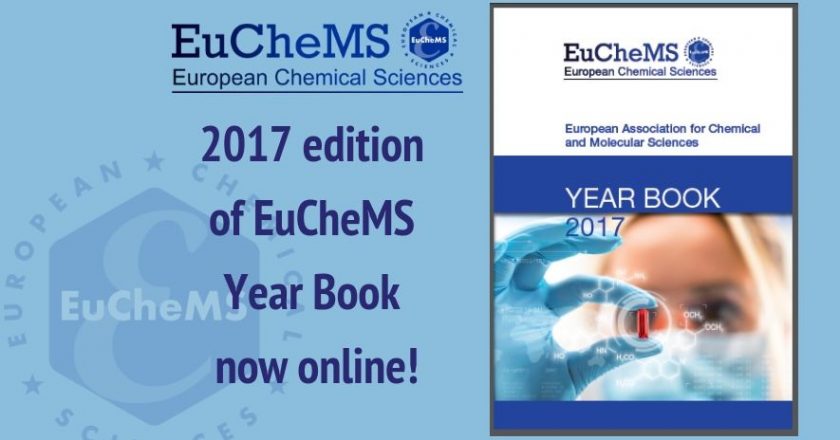
EuCheMS 2017 Year Book now online!
The EuCheMS 2017 Year Book is now available online! Download it for an insightful overview of EuCheMS Professional Networks, policy initiatives, conferences, events and much, much more!
7th EuCheMS Chemistry Congress – ECC7
26 – 30 August 2018
Liverpool, UK
Website: https://www.euchems2018.org/
ECTN General Assembly
20 – 22 April 2018
Prague, Czech Republic
Website: http://old.vscht.cz/lam/ECTN/GAPrague.htm
Innovation and cultural heritage
20 March 2018
Brussels, Belgium
Website: https://ec.europa.eu/info/events/innovation-and-cultural-heritage-2018-mar-20_en
The International Symposium on Inorganic and Environmental Materials 2018 (ISIEM2018)
17 – 26 June
Ghent, Belgium
Website: http://www.isiem2018.org/
‘’Attilio Corbella’’ International Summer School on Organic Synthesis (ISOS 2018)
10 – 14 June
Gargnano, Italy
Website: http://corbellasummerschool.unimi.it/
You must be logged in to post a comment.